The rainbow rose is a rose-colored artificial leaves looks hun. This method uses a natural process to which water systems Rose arranged around the stem. With the division of the tribe, deer Eclipse into different colored water, the colors are drawn into the petals resulting in a multicolored rose.With This change to roses, which makes them no longer live as ordinary roses. Besides roses, other cut flowers such as chrysanthemums, pink pigeon, hydrangea and several types of orchids can be colored using the same methods.
Sunday, December 1, 2013
rainbow roses
The rainbow rose is a rose-colored artificial leaves looks hun. This method uses a natural process to which water systems Rose arranged around the stem. With the division of the tribe, deer Eclipse into different colored water, the colors are drawn into the petals resulting in a multicolored rose.With This change to roses, which makes them no longer live as ordinary roses. Besides roses, other cut flowers such as chrysanthemums, pink pigeon, hydrangea and several types of orchids can be colored using the same methods.
Labels: amazing flowers, flowers, plant, rainbow roses
Posted by Salma at 2:24 PM 0 comments
Spermatophyta
The size and shape of the plant seeds macroscopic body size vary in height. The highest seed plant tree with a height of over 100 m. Sequoiadendron giganteum d konifeerbome of Yosemite National Park, California, with the benefits of 115 m height and a diameter of about 14 m. Habit or stature various plant seeds, trees, such as wood, Duku, coconut, banyan, fir, Perduk, such as roses, peacock flower, hibiscus, shrubs, herbs and fruit strawberries, lilies and purslane flowers.
Structure and function ...
Labels: plant, plants, Pollination, Pollinator, Spermatophyta
Posted by Salma at 2:11 PM 0 comments
Thursday, April 28, 2011
smallest crop in the world

If there's largest flower in the world, surely there is interest by the size of the smallest in the world. Record holder of the world's smallest flower falls on plants in the genus Wolffia species, a type of plant without roots is very small in the types of duckweed family (Lemnaceae) living in a quiet stream and pond.
This plant is also regarded as a plant with the smallest size in the world. There are two species of the genus Wolffia, namely Wolffia Augusta, Australian species, and Wolffia globosa, a tropical species. On average, these plants only have a size of not more than 1 mm, with average weight of just 150 micrograms
Labels: australian species, genus, genus wolffia, green smallst crop, plant, plants, smallest crop, tropical species, wolffia, wolffia augusta, wolffia globosa
Posted by Salma at 1:24 PM 0 comments
Wednesday, December 17, 2008
Salak (snake fruit)
Salak (Salacca zalacca, syn. S. edulis, Calamus zalacca) is a species of palm tree (family Arecaceae) native to Indonesia and Malaysia. It is a very short-stemmed palm, with leaves up to 6m long; each leaf has a 2m long petiole with spines up to 15cm long, and numerous leaflets.
The fruit grow in clusters at the base of the palm, and are also known as snake fruit due to the reddish-brown scaly skin. They are about the size and shape of a ripe fig, with a distinct tip. The pulp is edible. The fruit can be peeled by pinching the tip which should cause the skin to slough off so it can be pulled away. The fruit inside consists of three lobes, each containing a large inedible seed. The lobes resemble, and have the consistency of, large peeled garlic cloves. The taste is usually sweet and acidic, but its apple-like texture can vary from very dry and crumbly (salak pondoh from Yogyakarta) to moist and crunchy (salak Bali).
Salak fruit has been cultivated throughout Indonesia and there are at least 30 cultivars, but most of which have an astringent taste and are not sweet. Two popular cultivars are salak pondoh from Yogyakarta province (found in 1980s) and salak Bali from Bali island.
Salak pondoh
Salak pondoh is an important fruit in Yogyakarta province. In the five years to 1999, the annual production of salak pondoh in Yogyakarta doubled to 28,666 tons. The popularity of salak pondoh (compared with other cultivars) among local Indonesian consumers is mainly due to the intensity of its aroma, which can be overripe and sweaty even before full maturation.[1] The salak pondok cultivar has been produced outside the province. However, the distinctive aroma of salak pondoh is not as popular among non-native consumers.[1]
Salak pondoh has three more superior variations, namely pondoh super, pondoh hitam (black pondoh), and pondoh gading (ivory-english term for gading / yellowish-skinned pondoh).
Salak Bali
Salak Bali is commonly sold all over the island of Bali, and is a popular fruit with both locals and tourists. It is also a favourite fruit of the monkeys found in the famous "Monkey Forests", with the animals often stealing fruit from visitors, especially children whom they see as an easier target. The fruit is roughly the size of a large fig, and has a crunchy and moist consistency. The fruit has a starchy 'mouth feel', and a flavour remeniscent of dilute pineapple and lemon juice.
Salak Gula Pasir
The most expensive cultivar of th Bali salak is the 'gula pasir', which is smaller than the normal salak and is the sweetest of all salak. The price in Bali is 15,000rp-30,000rp+ per kilogram (dependent on time of year when more trees are fruiting), against about 12,000rp for regular salak (non-Bali salak are cheaper than this as they are not as sweet). www.wikipedia.com
| Salak | ||||||||||||||||
|---|---|---|---|---|---|---|---|---|---|---|---|---|---|---|---|---|
Salak fruit | ||||||||||||||||
| Scientific classification | ||||||||||||||||
| ||||||||||||||||
| Binomial name | ||||||||||||||||
| Salacca zalacca (Gaertn.) Voss |
Posted by Salma at 9:25 PM 0 comments
Ginger
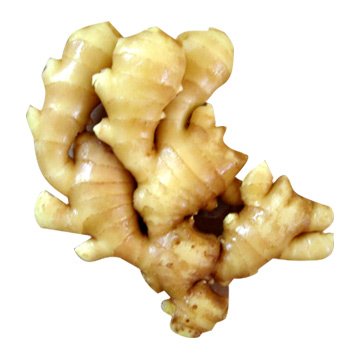
The roots of this one, other than have a distinctive odor also have a spicy taste and quite sharp. Many functions of ginger for our health. In addition to expedite blood circulation, ginger is also working to incite. Boiled ginger and palm sugar. Filter and drink warm-warm. This herb to help us drive out hypothermia, which can attack when we are trapped in the cold air. Ginger is also very good for nausea (because of pregnancy, illness, the influence of drugs, etc.), colic and other digestive disturbances. In addition, ginger can also be used for anti-inflammation drugs, and help overcome cough and sputum thin. How to make ginger beverages similar to turmeric. Just replace the palm sugar with honey. Drinking warm-warm three times a day to help dilute sputum and relieve cough.
Posted by Salma at 9:03 PM 0 comments
Saturday, December 6, 2008
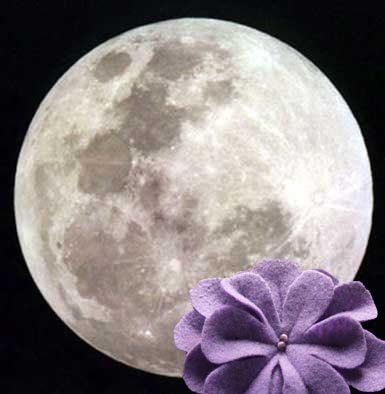
Plants and flowers can grow in Moon rocks
Researchers with the European Space Agency (ESA) has shown that plants and flowers can be grown on the Moon by demonstrating that Marigold can grow in crushed rock very much like the lunar surface, without the need for plant food.
According to a report by BBC News, the new research was presented at the European Geosciences Union (EGU) meeting in Vienna.
"We wanted to create a system of water circulation and recovery, which is also the type of system, which in any case, you want to develop when you are on track to produce a primitive form of life support system," said Bernard Foing, a senior researcher with the European Space Research and Technology Center (ESTEC) in the Netherlands.
"So it is also a kind of" technological breadboard 'to maintain a simple life form in an extreme environment, "he added.
The new steps are taken in the experiments reported in the EGU, is to eliminate the need to bring nutrients and soil from Earth.
A group led by Natasha Kozyrovska and Iryna Zaetz from the National Academy of Sciences in Kiev planted Marigold in crushed anorthosite, a type of rock found on Earth, which is very similar to a large part of the lunar surface.
In sirlige anorthosite, the plants have performed very poorly. But adding different types of bacteria made them thrive; the bacteria appeared to draw elements from the rock that the plants are needed, such as potassium.
Dr Foing, who presented the study at the EGU meeting, said there was no reason in principle why the same idea could not bear fruit on the Moon itself. Tools could crush the Lunar rock and add bacteria and seeds.
"However, scientists could see that go further, by selecting plants or bacteria, which are particularly well adapted to Lunar conditions, or even by genetically engineering new strains," he added.
According to Foing, growing plants on the Moon would be useful as a tool to learn how life adapts to the Lunar conditions, and as a practical aid to establishing manned bases. (www.topnews.com)
Posted by Salma at 7:26 AM 0 comments