Somehow the Javanese still refer to this plant in Indonesia. The name means "the cat's tail."
The "tail" is impressive, botanically speaking. It is 25 inches long, bushy and cats as true "queues as long as it's not that cats Indonesian you mean. The shrub itself, with hundreds of deep red-tails "is more than 5 feet tall.
Showing posts with label indonesian florist. Show all posts
Showing posts with label indonesian florist. Show all posts
Saturday, November 15, 2008
EKOR KUCING

KOCOPIRING

| Indonesian name: kacapiring
The name means "China", as in dining plates and bowls, or, if anglicized literally, "glass". In some places it as "Gardenia". This plant was probably under the charge of Javanese be downloaded by Chinese ships 1200's. It is more beautiful than roses, and the smell is bigger, too, and certainly more - you can sniff it out one miles away, or so it seems.  Real kacapiring is a tree. A tall, bushy tree, whose height is approximately the same as that of everyone in the Chicago Bulls, with the exception of the trainer. But this plant is not in connection with financial things. | ||
Wednesday, May 7, 2008
SOKA | Indonesian name: angsoka
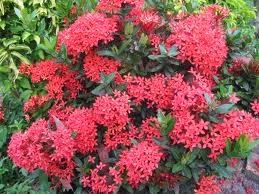
Ananicados and sold in large pots, is what this Javanese flowers' luck these days. It's happening since 1990. Before that, SOKA grew in large trees in their own people in the old-fashioned gardens. The other is white color of the flowers.

ÈNCÈNG GÓNDHÓK | Indonesian name: eceng gondok

This thing is growing at lightspeed wherever she tossed, as long as the place of the reservoir. So the Indonesians in general consider it as a danger and pestilential plant, and not anything good until 1990. In 1990, some "experts" in gardening and such - Indonesia never Marty Stuart, thank God, - began a campaign for the plant, as civilized garden element. His violet light (the color of flowers) is beautiful, like transparent watercolor stroke, but this is not why the Central Javanese never complained about this factory choking our waterways, even when Jakartanese same loudly every day. The entire plant, were found beaten and dried and made submissions in the Central Javanese crafts ranging from 1980's.

KANTHIL

There is no Indonesian name for this flower plant. Most Indonesians do not even know it exists, and the Javanese which is an archaic way of life thing that should have belonged to people always maintain skeletons of T-Rex, but it was not live. In good times, this flower has been made in some perfumes by people who work for the Javanese kings. Until 1970's, which was still an ingredient of animistic bid. Now it's just a rare greeny stuff. Needless to say, is not to be found to be sold anywhere in this country.
GANYÓNG | Indonesian name: kana

Some have said this throughout the year, came from the flower Caribbeans. Maybe so, but this has been the ingredient of any Javanese garden since hundreds of years ago, and growing by themselves in rural roads and neglected fields. It is not the venda, either, except in big cities where everything is.

Tuesday, May 6, 2008
Rafflesia, a native of tropical forests of Borneo and Sumatra in the Indonesian archipelago

Rafflesia, a native of tropical forests of Borneo and Sumatra in the Indonesian archipelago, is the largest flower in the world. Interestingly, Rafflesia is a parasitic plant without leaves, stems and roots (It was only the absorption of nutrients-son to absorb nutrients from the host where she lives), but for most flower. Kingdom Plantae Division Magnoliophyta Class Magnoliopsida Order Rafflesiales Family Rafflesiaceae Genre Rafflesia Species R. arnoldii Rafflesia is a huge five-speckled petals, with a diameter up to 106 cm and weighing up to 10 kg. Rafflesia flower has a small life of 5-7 days. Rafflesias have their stamens and pistils melted together in a central column, producing a crown, or corona, in the form of a ring. The reddish brown colors of petals, are dotted with white freckles. The smell attracts flies and carrion pollination occurs then. After 9 months of maturation, Rafflesia plant opens in a cabbage-sized button. The sexual organs are located under the edge of the disc. Facts on Rafflesia Rafflesia is the largest flowers. Titan arum bears the largest inflorescence. Rafflesia is a parasite that attaches to a plant-host Tetrastigma vine, which grows only in tropical forests intact, to get water and nutrients. The kind Rafflesia is named after adventurer and founder of the British colony of Singapore, Sir Stamford Raffles. Dr. Arnold is remembered in the name of the species that Rafflesia arnoldii. Rafflesia flower is the official state of Sabah in Malaysia and for the province of Surat Thani, Thailand. Manillana Rafflesia, the smallest species of the genus Rafflesia is also a 20 cm diameter flowers. Rafflesia flowers are unisexual. Mammals of forests and tree shrews eat fruits Rafflesia which is 15 cm in diameter, filled with good food and thousands of tiny seeds coated drive. He believes that Rafflesia is related to poinsettias, violets, passionflowers, and other members of the order Malpighiales. The smell of rotting of the flower is due to red tentacle-like, ramentae branched, inside the corolla petals. Rafflesia is an endangered or threatened species of the genus. Rafflesia arnoldii does not have chlorophyll, like all green plants have and therefore can not undergo photosynthesis.
Subscribe to:
Posts (Atom)
